
Search Missouri Marriage Records
Missouri marriage records are held by county Recorders of Deeds and the state Bureau of Vital Records. The state has 114 counties plus the independent City of St. Louis. Each county Recorder of Deeds keeps the original marriage license on file at the local courthouse. The Bureau of Vital Records in Jefferson City has kept a central index of all Missouri marriages since July 1, 1948. You can search these records online, request them by mail, or visit a county office in person. This page covers how to find marriage records in Missouri, what documents you can get, and what the process costs.
Missouri Marriage Records Quick Facts
Where to Find Missouri Marriage Records
Missouri keeps marriage records at two levels. County Recorders of Deeds hold the actual marriage license and certificate for every marriage that took place in their county. This is the full document. It shows the names of both spouses, their ages, the date of the ceremony, who performed it, and where it was filed. The Recorder's office stores the original and can give you a certified copy when you ask for one. Some counties have records going back to the early 1800s. Others start with the date the county was formed. You can visit the courthouse or call ahead to check what they have on file.
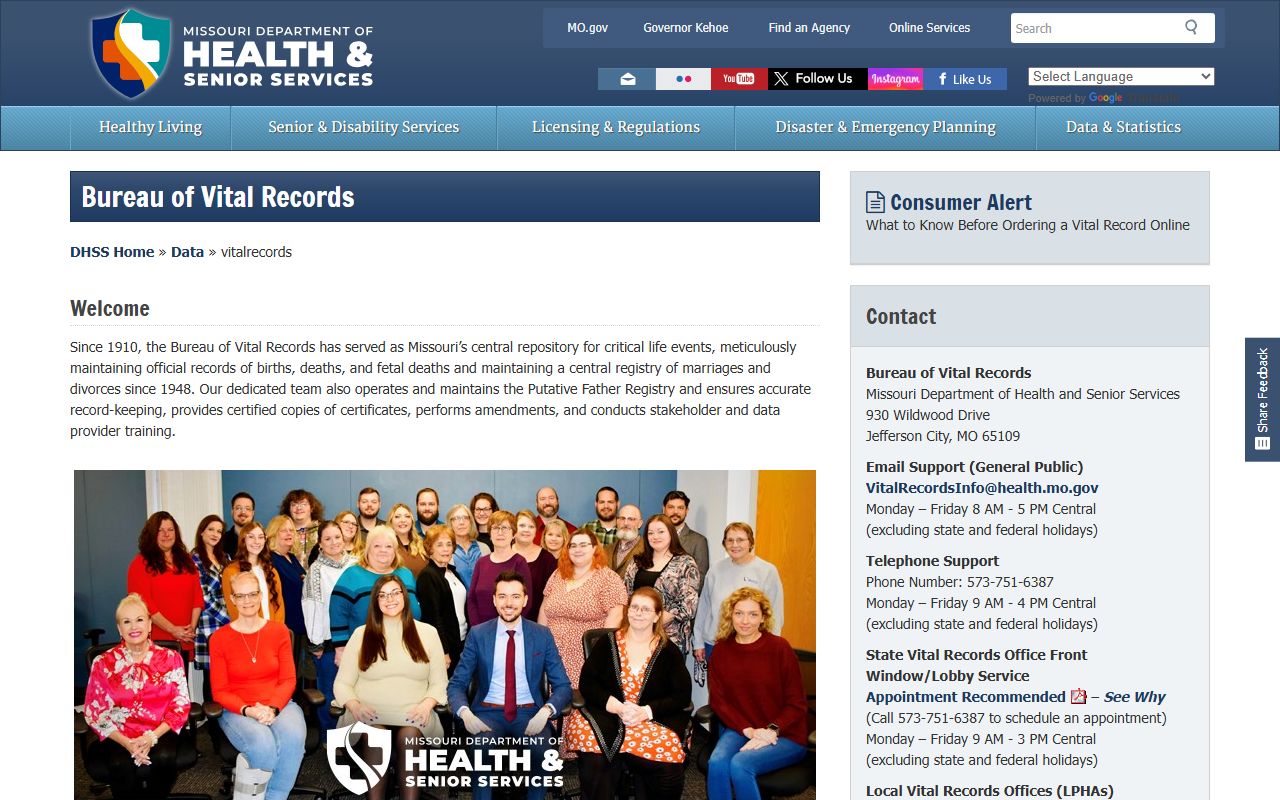
The Missouri Bureau of Vital Records operates at the state level within the Department of Health and Senior Services. This office holds a central registry of Missouri marriages starting from July 1, 1948. But what they can give you is different from what the county has. The Bureau issues a Certified Statement Relating to Marriage. This document only lists the names of both spouses, the date of marriage, and the county where it was recorded. It does not include the full details found on the original license. A marriage statement can be useful if you are not sure which county holds the record.
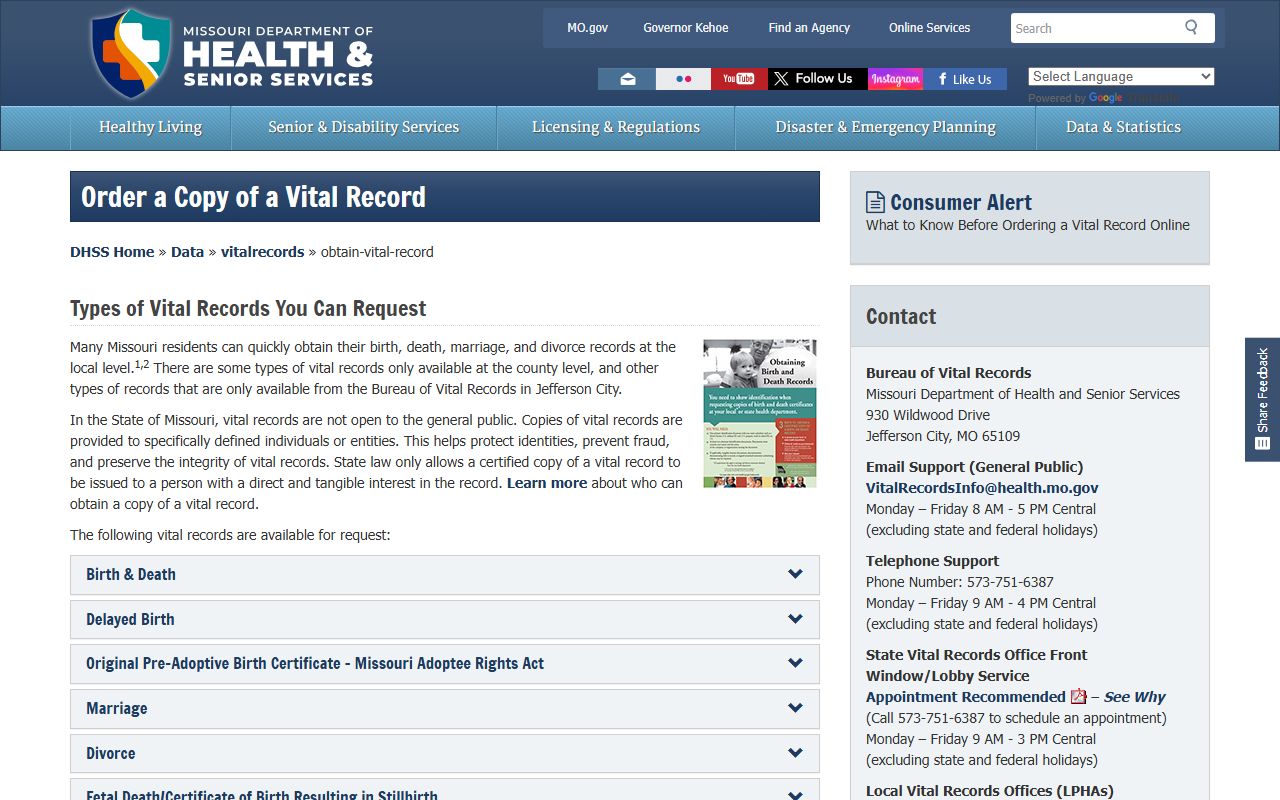
The Bureau of Vital Records ordering page explains the steps for requesting a marriage statement from the state office in Jefferson City.
For the actual certified copy of the original marriage certificate, you must contact the Recorder of Deeds in the county where the license was obtained. The Missouri Recorders Association provides a directory of all 114 county Recorders with phone numbers and addresses.
How to Search Marriage Records in Missouri
Several ways exist to look up marriage records in Missouri. Your choice depends on what you need and how far back the record goes. Online tools cover some counties and years. In-person visits work for older records that have not been digitized yet. Both methods are open to any member of the public under Missouri law.
The Missouri State Archives is one of the best starting points for historical marriage records. The Archives, a division of the Secretary of State's office, has microfilm copies of marriage records from counties across the state. Some of these go back to the early 1800s when Missouri was still a territory. You can use their County and Municipal Records Database to browse records by county and record type. The database shows scanned images of marriage registers, licenses, and indexes. Content gets added on a regular basis, though not every record has been digitized.
To search marriage records at the Archives, you can also submit an online research request. Staff will search up to a 10-year time frame for marriage records. You need to provide the spouse's name, the marriage date, and the county. It may take up to eight weeks to get a response since mail requests have priority. You can send up to three requests at a time. The Archives office is at 600 West Main St., Jefferson City, MO 65102 and can be reached at 573-751-3280.
FamilySearch also has copies of Missouri marriage records from many counties. Some of these date to the 1920s. Most pre-1850 marriages have been transcribed and published. This is a free resource for genealogical research.
Missouri Marriage License Process
Getting a marriage license in Missouri follows rules set out in Chapter 451 of the Missouri Revised Statutes. Both parties must go to the Recorder of Deeds office in person. You need a valid photo ID and your Social Security number. If you were married before, you will need to provide the date your last marriage ended. There is no blood test and no waiting period in Missouri.
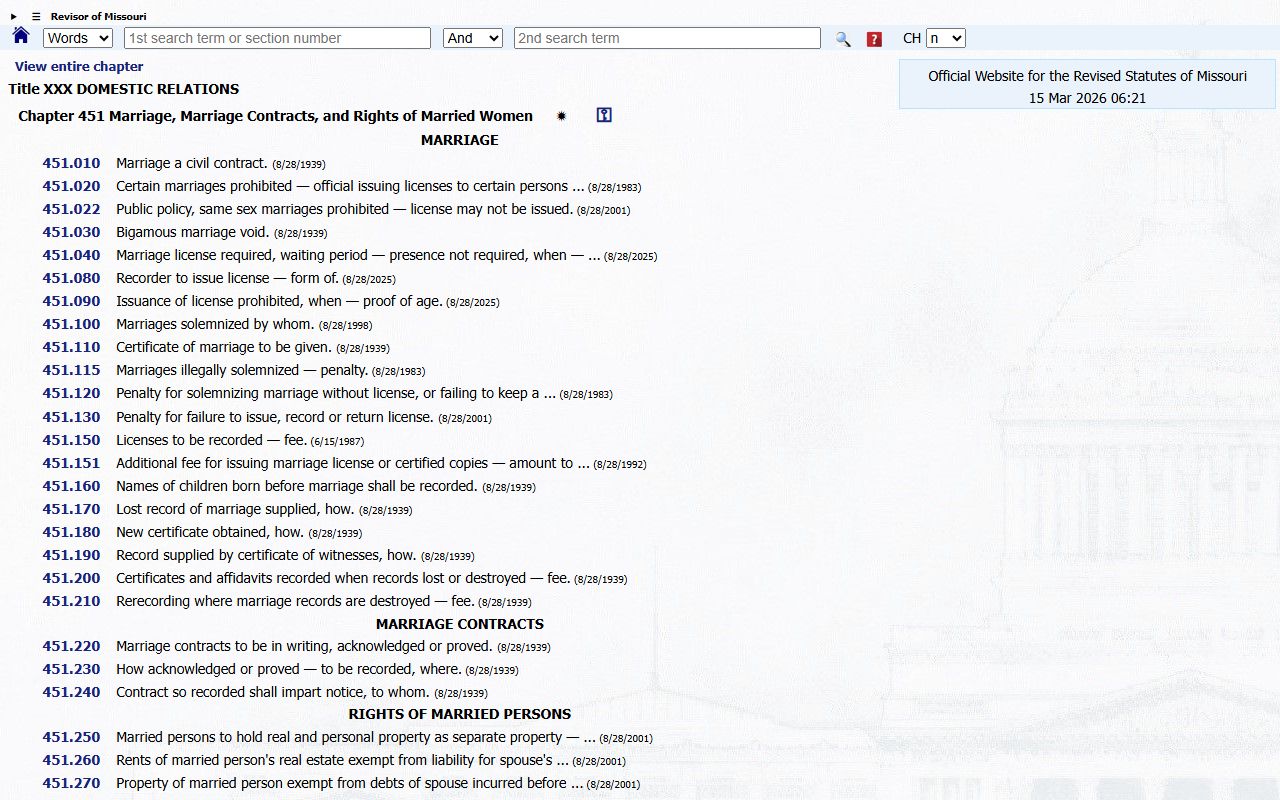
Under Section 451.090, no marriage can take place without a license. The license is valid for 30 days from the date it is issued and can be used anywhere in Missouri. After the ceremony, the person who performed the marriage must sign the license and return it to the Recorder of Deeds within 15 days, as required by Section 451.130. This returned license becomes the permanent marriage record on file at the county.
As of August 28, 2025, the minimum age for marriage in Missouri is 18 years. No exceptions exist for parental consent or judicial approval. Both parties must be at least 18 to apply for a marriage license anywhere in the state.
Note: Marriage license fees range from $46 to $60 depending on the county, with most offices accepting cash only at the time of application.
Types of Missouri Marriage Records
Two distinct documents are available when you request marriage records in Missouri. The first is the certified copy of the marriage certificate. This comes from the county Recorder of Deeds and includes all the details from the original license. It shows both names, birth dates, the ceremony date, the officiant, witnesses, and the filing information. Most people who need a marriage record for legal purposes will want this document. Certified copies from the county typically cost $9.
The second type is the Certified Statement Relating to Marriage from the state Bureau of Vital Records. This is a shorter document. It only confirms the names of both spouses, the date of marriage, and the county where it was recorded. It does not have the full detail of the county certificate. People sometimes use this when they need proof of marriage but are not sure which county has the record. The Bureau of Vital Records contact information is 930 Wildwood Drive, Jefferson City, MO 65109, phone 573-751-6387, email VitalRecordsInfo@health.mo.gov.
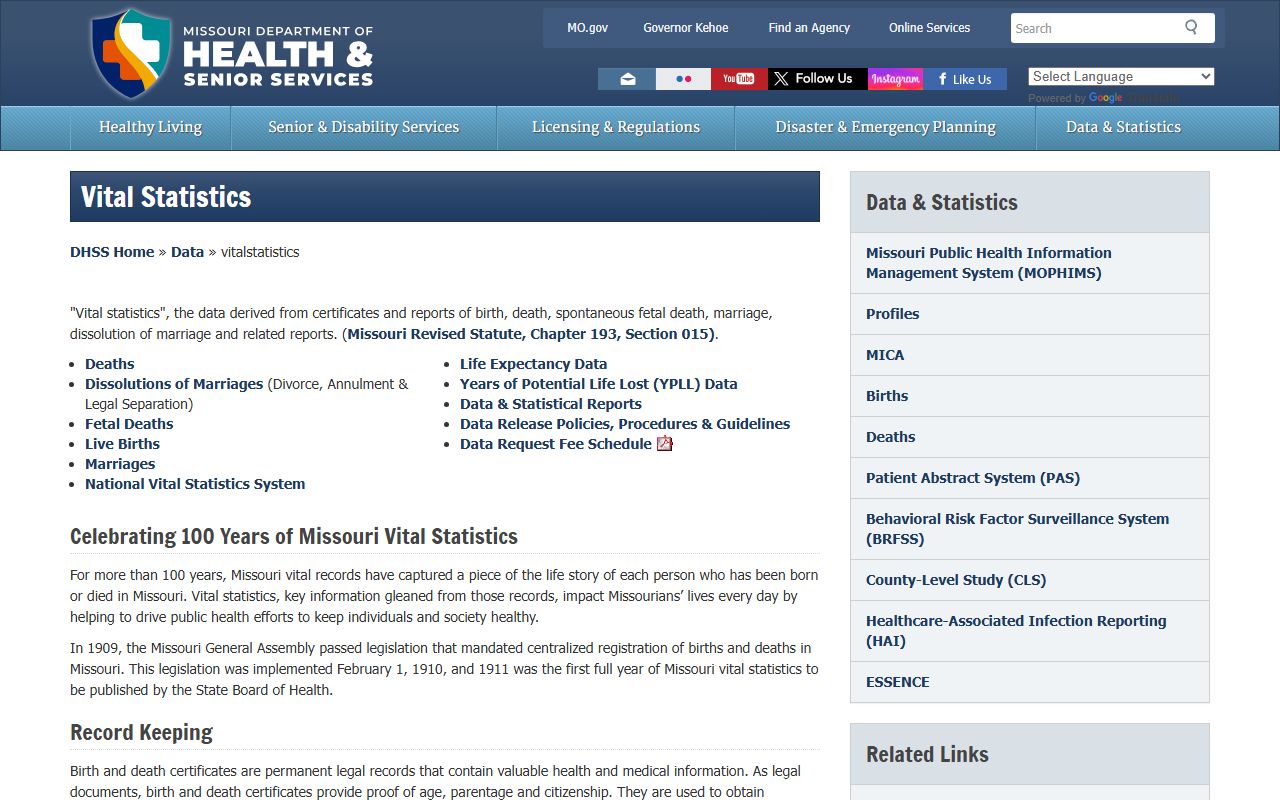
Under Chapter 193 of the Missouri Revised Statutes, the state maintains vital statistics including marriage data. Section 193.255 limits who can get a certified copy. You must be a person with a direct and tangible interest in the record. You also need a notarized application and the search fee. The county-level records are more broadly accessible under the Missouri Sunshine Law, which makes most government records open to the public.
Marriage Record Fees in Missouri
Fees for marriage records in Missouri vary by county. The cost to get a marriage license ranges from $46 to $60 across the state. Some counties charge as low as $46, while others charge $60 or more. Most Recorders of Deeds accept cash only for license applications, though a few take debit or credit cards with a small convenience fee added on top.
Certified copies of existing marriage records cost $9 in most counties. Some counties charge $10. Non-certified photocopies are usually $1 to $2 per page. If you need records for military purposes, many counties will provide certified copies at no charge. You can also order marriage statements from the Bureau of Vital Records by mail or through VitalChek, their authorized online vendor. VitalChek adds a service fee on top of the state fee. Call VitalChek at 1-877-817-7363 for phone orders.
Are Marriage Records Public in Missouri
Marriage records in Missouri are generally public. The Missouri Sunshine Law, found in Chapter 610 of the Revised Statutes, gives the public the right to inspect and copy government records. This applies to marriage records held by county offices. You do not need to be one of the spouses. You do not need to give a reason for your request.
There is a distinction though. Under Section 193.255 of the Missouri Revised Statutes, certified copies of vital records from the state Bureau require proof of tangible interest. This means you need to show you have a legitimate reason. But at the county level, marriage licenses filed with the Recorder of Deeds are treated as public documents. Anyone can visit the Recorder's office and ask to see them. Some counties even let you search marriage records online through their websites.
Missouri law also governs how long these records are kept. Under RSMo Chapter 109, marriage records are classified as permanent records. They must be kept forever. This is why some counties still have marriage records from the early 1800s on file.
Historical Marriage Records in Missouri
Missouri has a long history of recording marriages. County clerks began keeping marriage records from the earliest days of each county. Some records date from the early 1800s when the area was still a territory without formal county lines. Statewide registration of marriage began in 1881, and the files are mostly complete after that date.
The Missouri State Archives is the main repository for historical marriage records. Their County and Municipal Records Database provides digitized images of records that have been transferred to microfilm. You can browse by county, office, and record type. The National Center for Health Statistics also provides guidance on where to write for Missouri vital records including marriage documents.
For those doing genealogical work, the FamilySearch Library holds copies of marriage records from each Missouri county. Many of these date to the 1920s. Most pre-1850 marriages have been transcribed in various publications. The Bureau of Vital Records has its index to marriage records from July 1948 forward. Older records must be sought at the county level or through the State Archives.
Browse Missouri Marriage Records by County
Each county in Missouri has its own Recorder of Deeds who maintains marriage records. Select a county below to find local contact information and resources for marriage records in that area.
Marriage Records in Major Missouri Cities
Missouri handles marriage records at the county level. City residents get their licenses from the county Recorder of Deeds. Select a city below to learn which county office serves that area.